
Back to Templates
Other Education Templates

Digital Credential Verification Platform
This analysis evaluates the implementation of blockchain technology for managing academic credentials, certificates, and student transcripts. Benefits include secure credential verification, fraud prevention, faster verification processes, global credential portability, and improved institutional trust while accounting for blockchain infrastructure, system integration, regulatory compliance, user onboarding, cybersecurity, and platform maintenance.

Digital Library and Knowledge Management Platform
This analysis evaluates the implementation of a digital library ecosystem that expands access to educational resources and improves institutional knowledge management. It examines benefits including enhanced resource accessibility, reduced physical storage requirements, improved research capabilities, user analytics, and operational efficiency while considering investments in content digitization, digital repositories, licensing agreements, platform implementation, cybersecurity, and ongoing maintenance.

Campus Housing Investment Project
This evaluates investments in student housing infrastructure to improve campus experience and institutional capacity. It measures benefits including increased student enrollment, higher retention rates, improved student satisfaction, enhanced campus life, and sustainable revenue generation while accounting for construction, utilities, facility management, maintenance, staffing, and long-term asset management costs.

Innovation and Experiential Learning Hub Development
This analysis evaluates the establishment of specialized learning hubs such as innovation labs, makerspaces, entrepreneurship centers, and collaborative research environments. Benefits include experiential learning, innovation capacity, interdisciplinary collaboration, workforce readiness, and industry partnerships while considering investments in facilities, specialized equipment, digital technologies, staffing, operational support, and program management.

Student Mobile Engagement Platform
This template evaluates the development of a comprehensive mobile application that enhances student engagement and access to academic services. It examines benefits including improved communication, academic progress tracking, digital service accessibility, student engagement, and administrative efficiency while accounting for application development, backend infrastructure, cybersecurity, user testing, system integration, maintenance, and continuous feature enhancements.

Integrated Education Management Platform
This analysis assesses the implementation of a school management system over a 5-year span, emphasizing benefits such as administrative efficiency, data centralization, improved reporting, and communication. It also includes costs such as system licensing, customization, training, and technical support.
Solar Campus Transformation Project
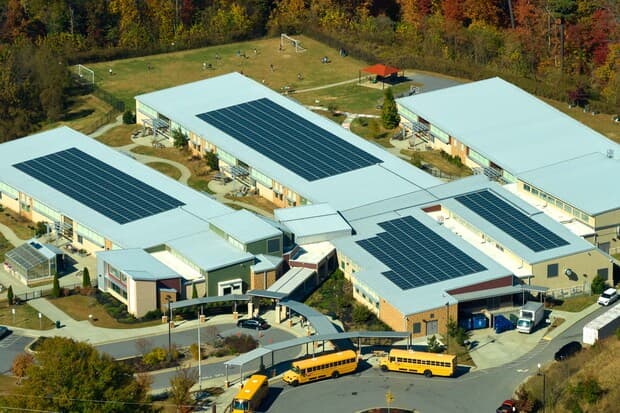
This evaluates the deployment of solar energy systems across educational facilities to reduce operating costs and improve environmental sustainability. Benefits include long-term energy savings, reduced carbon emissions, energy resilience, and improved ESG performance while considering investments in photovoltaic systems, installation, energy storage, maintenance, monitoring systems, and regulatory compliance.

Learning Analytics Implementation Program
This template evaluates the deployment of student data analytics solutions to support evidence-based academic decision-making. It assesses benefits including predictive student interventions, improved retention, personalized learning pathways, academic performance insights, and institutional planning while considering investments in analytics platforms, data integration, governance frameworks, staff training, cybersecurity, and privacy compliance.

Immersive Learning Technology Program (VR/AR)
It evaluates the integration of virtual reality (VR) and augmented reality (AR) technologies into educational delivery. It examines benefits including immersive learning experiences, improved knowledge retention, greater student engagement, enhanced accessibility, and experiential learning while considering investments in VR/AR hardware, software development, digital content creation, educator training, and ongoing maintenance.

Smart Technology Integration In Classroom
This analysis evaluates the adoption of smart classroom technologies over five years. It highlights benefits such as interactive lessons, digital resource integration, real-time feedback, and engagement. Costs include hardware procurement, software licensing, training, and support.